
A voice for an Amazon that does not fit within borders
On the map, the Amazon is one. In politics, it is not.
It stretches across Brazil, Bolivia, Colombia, Ecuador, Guyana, Peru, Suriname and Venezuela. Each country has its own government, its own Congress, its own laws, priorities and interests. But the problems affecting the region do not respect those borders.
A fire in the Amazon does not stop at the line separating two countries. Deforestation, illegal mining, drug trafficking, pressure on rivers, biodiversity loss, and the effects of climate change also cross borders.
This is where the importance of the Amazon Parliament, PARLAMAZ, comes from: creating a space where representatives of the eight countries can discuss together what none of them can solve alone.
The idea is not new.
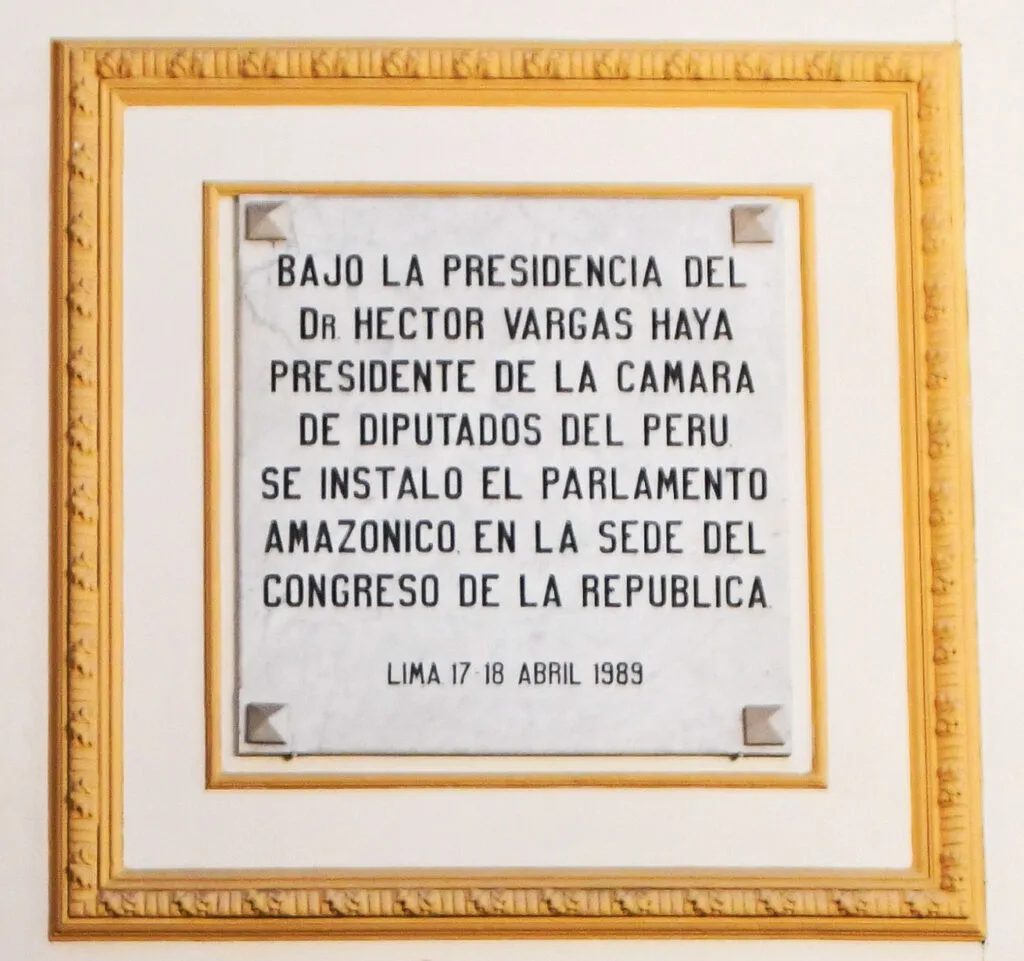
PARLAMAZ was created on April 17, 1989, in Lima, Peru, at the initiative of the Peruvian Congress. The proposal was to bring together the Parliaments of the countries that signed the 1978 Amazon Cooperation Treaty, in order to bring them closer and build common policies for the region.
But the Parliament was unable to maintain a continuous trajectory.
There were periods of activity and periods of silence. Attempts to revive it took place in 2004 and 2008, but the body lost momentum once again.
That was when Brazilian Senator Nelsinho Trad entered the story.
The Parliament had been created. The problem was making it exist again in practice.
In 2019, the senator from Mato Grosso do Sul, Brazil (a state that is home to the Pantanal, a biome directly influenced by the Amazon’s rainfall patterns), was chairing the Senate Foreign Relations Committee when he received a request from the ambassadors of the Amazon countries in Brazil to consider reviving Parlamaz.
It was not a matter of creating a new Parliament. It already existed.
It was a matter of restoring an institution that had lost its continuity.
The pandemic delayed the effort. On November 30, 2020, however, Senator Nelsinho Trad held the first strategic meeting to discuss its reactivation.
The outcome: the eight countries were to appoint their representatives and begin rebuilding the body.
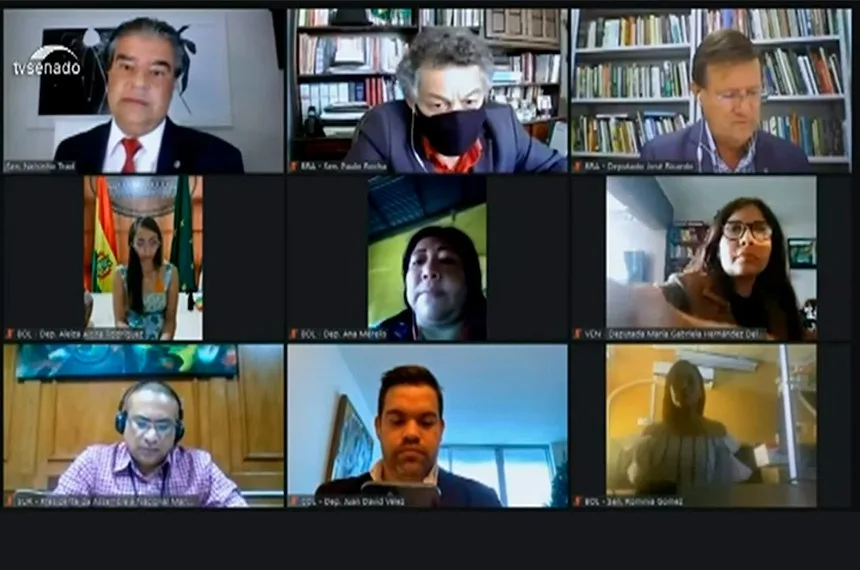
This is the first essential part of the story: Senator Nelsinho Trad did not create Parlamaz. He led its revival after years of discontinuity.
And from then on, there was an even bigger problem to solve: how to keep the Parliament from disappearing again?
2021: the challenge of getting back to work with the world paralyzed by a virus
The first year was one of rebuilding in the midst of the coronavirus pandemic and the barriers it imposed.
PARLAMAZ began holding virtual meetings, and Senator Nelsinho Trad used the structure of the Senate’s Amazon Cooperation Treaty Parliamentary Group to support the work on the Brazilian side.
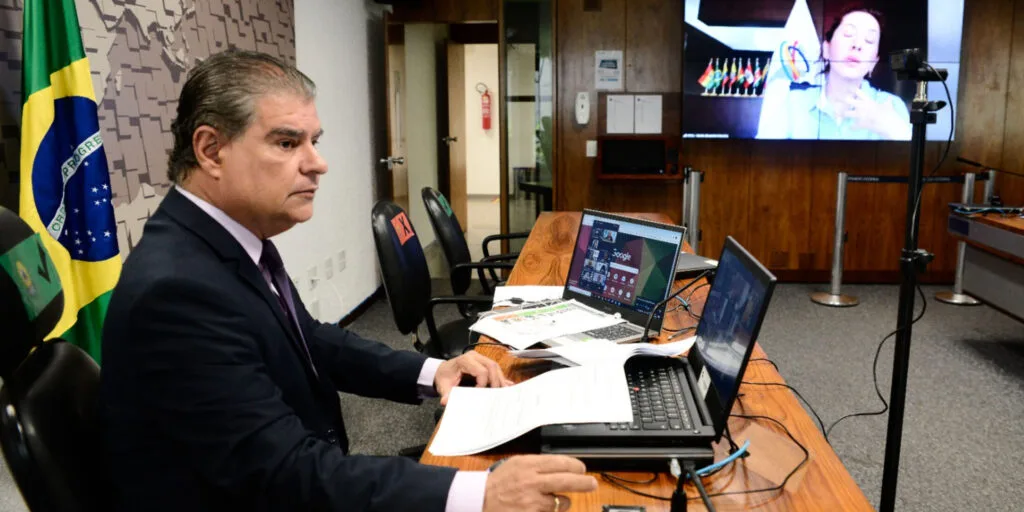
The parliamentarians chose vice presidents, defined priority topics and began to structure a common agenda. The Amazon Cooperation Treaty Organization (ACTO) began to take part in the discussions, as did Brazilian and foreign experts.
The agenda already showed the scale of what was being rebuilt.
In September, the debate focused on COP26, with the participation of ACTO’s Secretary-General, the organization’s Executive Director, the Colombian Ambassador to Brazil and former Brazilian Environment Minister Izabella Teixeira.
In November, PARLAMAZ returned to the topic to discuss the outcomes of the conference.
But the institutional question remained.
The Parliament was able to meet. What was missing was a structure that would allow it to exist independently of any particular government or Congress.
2022: leaving Brasília and returning to the Amazon
On May 18, 2022, PARLAMAZ held its first in-person meeting in Brasília since its reactivation.
The meeting took place at ACTO headquarters and was attended by then Minister of Foreign Affairs Carlos França.
The central issue was not only environmental. It was institutional: how to incorporate PARLAMAZ into the Amazon cooperation framework so that it would not suffer new interruptions?
A few months later, the parliamentarians went to Colombia.
In November 2022, the agenda took PARLAMAZ to Putumayo, in the Colombian Amazon.
There, the Parliament did something that would become a hallmark of its work: it left the meeting room and went to learn about experiences on the ground.
The parliamentarians visited sustainable production initiatives and learned about the production of chontaduro (peach palm) and pirarucu management experiences in Villagarzón. They also took part in a seminar on financing for the Amazon.
And a question emerged that would become central in the following years.
The parliamentarians argued that financing for the Amazon could not be conceived solely through bilateral agreements. If the territory and its problems are transboundary, the financial response must also treat the region as an integrated system.
It was also in Putumayo that PARLAMAZ began to discuss its dual role more clearly: environmental and economic.
Talking about preserving the forest was not enough. It was necessary to discuss how to generate income, jobs and development for the people who live in it.
2023: PARLAMAZ reaches the presidents’ table
In 2023, this discussion took on a new dimension.
Belém was preparing to host the Amazon Summit. Before the meeting of heads of state, PARLAMAZ held its own meeting in the city.
The institutionalization of the Parliament remained on the agenda.
But now there was also a political opportunity: to bring to the presidents of the eight countries a position built by their Parliaments.
In August, that happened.
The president of Parlamaz, Senator Nelsinho Trad, presented the Declaration of the Amazon Parliament to the heads of state.
And he explained what the role of that body should be.
PARLAMAZ should serve as an instrument to facilitate decisions within national legal systems, as a permanent forum for discussing Amazon issues, and as a space for coordination in the formulation and implementation of public policies.
A presidential declaration can set a political direction. But once it is signed, each country needs to turn that direction into laws, budgets, regulations, and public policies.
That is where Parliaments come in.
PARLAMAZ seeks to build a bridge between what the eight countries decide together and what each country needs to do within its own institutions.
Senator Nelsinho Trad was also invited to present the Parliament’s agenda to the foreign ministers of the Amazon countries, precisely at a time when discussions on institutionalizing the group were gaining strength.
2024: from protection to the forest economy
In 2024, PARLAMAZ returned to Lima.
The choice had special meaning: Lima was where it was born, in 1989.
In June, the eight countries met again at the Peruvian Congress.
Institutionalization was still under discussion. But the agenda was also moving toward another point: the bioeconomy.
If the Amazon needs to be preserved, the people who live there need economic alternatives.
For this reason, the delegations visited Chazuta, where they toured a cocoa factory and learned about community initiatives linked to the Chazuta Cultural Center.
Senator Nelsinho Trad also met with Peruvian congressman Arturo Alegría, chair of the Constitution and Rules Committee of the Peruvian Congress.
The debate was gaining new relevance: it was no longer just about discussing environmental principles, but about seeking experiences that could inspire public policies and legislation in the different countries.
2025: PARLAMAZ begins to turn discussion into a common agenda
In 2025, the institutional discussion moved forward.
In March, the PARLAMAZ Board of Directors met in Brasília to receive information from ACTO about a working group tasked with studying precisely what kind of institutional link could be established between the Parliament and the Amazon organization.
In June, again in Lima, PARLAMAZ unanimously approved documents related to ACTO’s integrated management networks, including integrated fire management, as well as a statement of support for the COP16 on Biodiversity and COP29.
On that occasion, Senator Nelsinho Trad reported that PARLAMAZ had been approached by the FAO to take part in an international discussion on fire management.
This shows an important shift.
The Parliament that had been reactivated simply to function again was now also being sought out by international institutions to take part in specific discussions.
But there was an outstanding issue that could no longer be overlooked.
PARLAMAZ still has no budget of its own, no permanent secretariat and no consolidated institutional structure.
In August 2025, at a meeting in Bogotá, once again on the sidelines of an Amazon Summit, the parliamentarians renewed their call for its formalization. At the same meeting, they discussed the implementation of the 2023 Belém Declaration, two years after its adoption.
At that time, approximately 70% of the actions related to the Belém Declaration were still at an early stage. Among the demands were climate finance, social and Indigenous participation, the strengthening of ACTO, and preparations for COP30.
Here, perhaps, lies Parlamaz’s greatest challenge.
Building consensus is only the first step. Making that consensus reach the budgets, legislation and implementation of the eight countries is another story.
What PARLAMAZ has achieved
Since its revival, PARLAMAZ has developed an agenda that did not exist in an organized form before 2020.
Today, there is a permanent network of dialogue among parliamentarians from the eight countries.
Meetings have been held in Brasília, Bogotá, Putumayo, Belém and Lima, in addition to international engagements.
Missions and technical visits have been carried out to learn about sustainable production and bioeconomy experiences.
PARLAMAZ has established institutional dialogue with ACTO, taken part in the agendas of the 2023 and 2025 Amazon Summits, and delivered its own declaration to the heads of state.
It has also begun working on topics such as:
- financing for the Amazon;
- bioeconomy;
- biodiversity;
- climate change;
- integrated fire management;
- combating deforestation;
- environmental crimes;
- sustainable development;
- the rights of Indigenous peoples and traditional communities;
- and the implementation of commitments made by the countries.
In October 2025, PARLAMAZ approved a new declaration reaffirming commitments to protecting the Amazon, strengthening ACTO and the Parliament itself, climate finance, the bioeconomy, the rights of Indigenous peoples and local communities, and legislative measures against deforestation and environmental crimes.
That is progress.
But it is important not to confuse political commitment with implemented public policy.
What is still missing
The main outstanding issue is precisely the one that has accompanied PARLAMAZ since its reactivation: giving the Parliament a permanent institutional structure.
The process of defining its link with ACTO has advanced, but still depends on consensus among the countries. Brazil’s Ministry of Foreign Affairs itself has argued that this process should be gradual and that the institutional link should be carefully examined.
Also still pending are:
- a budget of its own;
- a permanent secretariat;
- and mechanisms capable of turning Parlamaz’s decisions and declarations into initiatives within the eight legislative systems.
This last point is decisive.
Because the ultimate goal is not to produce yet another document about the Amazon.
It is to ensure that a decision built by the eight countries can become legislation, budgets and public policy in each of them.
The story is not over yet
PARLAMAZ managed to come back and bring its eight countries back to the same table.
It has also been able to build a common agenda, produce declarations and commitments, and join the international debate on the Amazon.
The challenge now is to ensure that what the Amazon countries advocate together moves off the table and into the laws, budgets and public policies of the entire Amazon.
It is in this second chapter that Senator Nelsinho Trad intends to continue working for the sustainable development of the region, regardless of his presidency.